- prev
- next
DIY Highway Toll Booth Simulation Kit, STEM Toll Gate Simulator Circuit Board Soldering Practice Kit with 2 Mini Cars, STEM Electronics Project for Classroom & Home Learning
$23.79$33.9930%
00d : 00h : 00m : 00s
Item ID: GY21987-1
Product Details
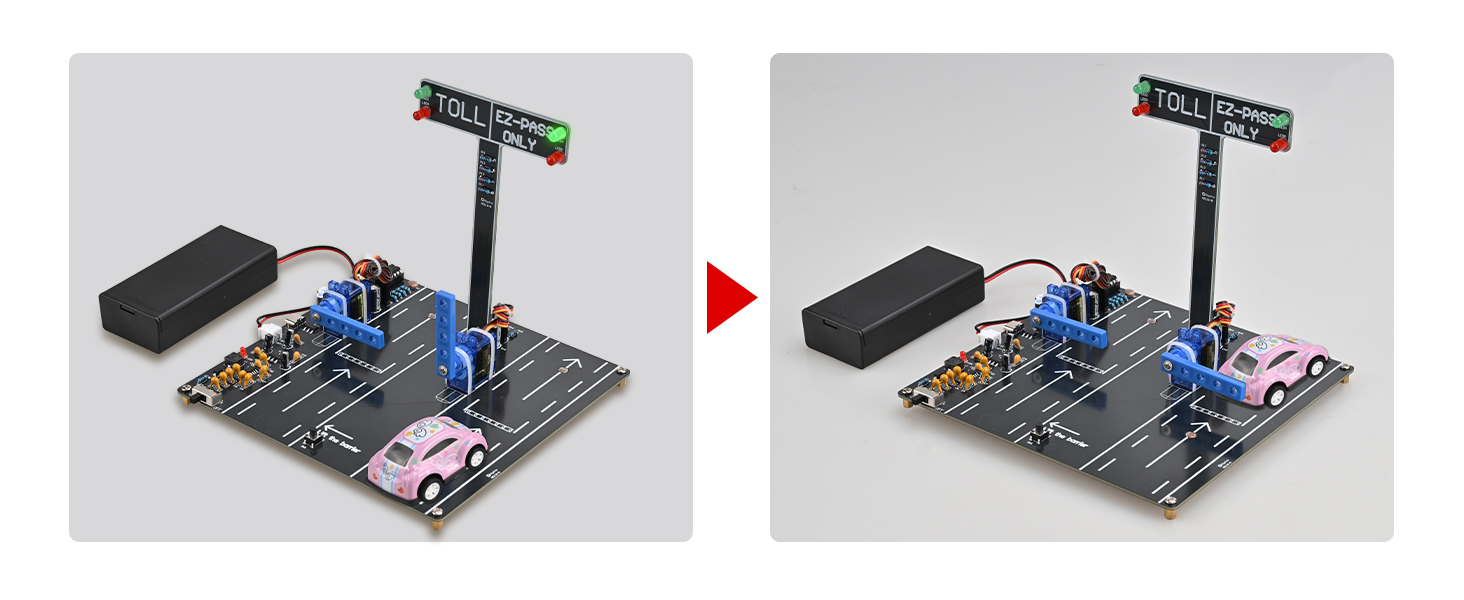
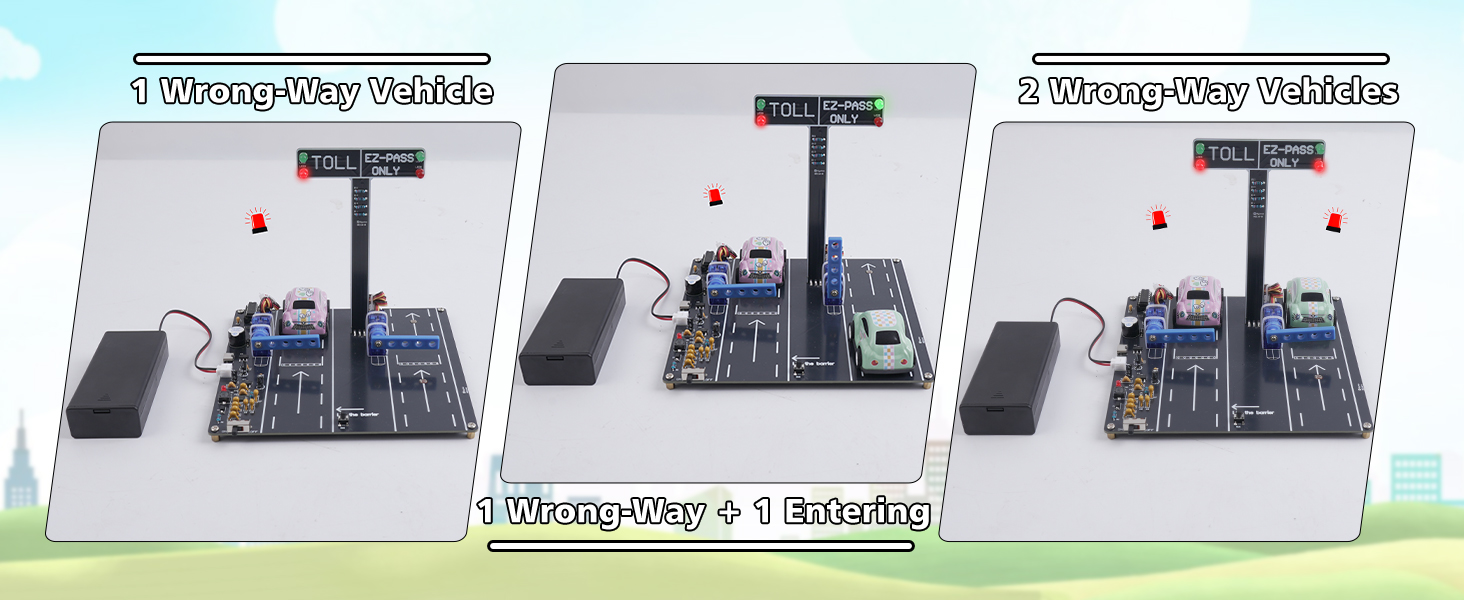
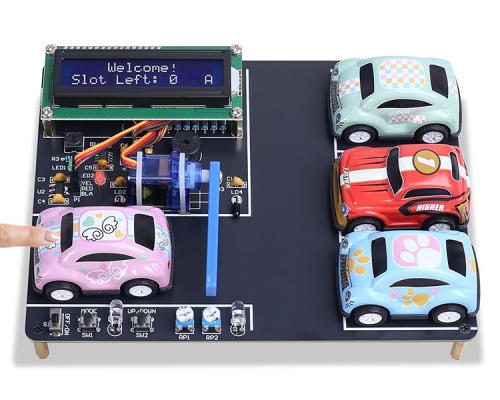
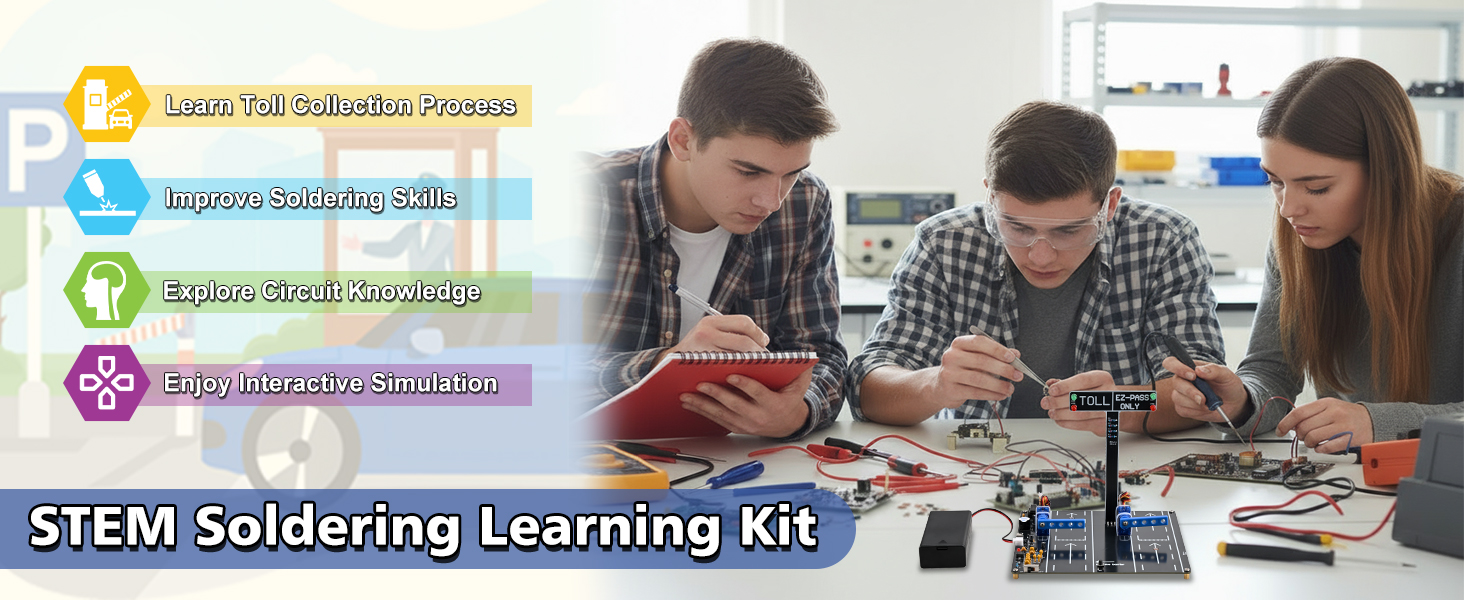
【Highway Toll Plaza Simulation】:This DIY toll booth kit recreates an American highway toll plaza with two functional lanes – "EZ-PASS ONLY" and "TOLL." The gate arm lifts and lowers automatically or manually as cars pass through, just like on the real highway. If a vehicle tries to drive the wrong way, an alarm sounds immediately. Students and DIY hobbyists can explore how toll systems work while sharpening their soldering skills.
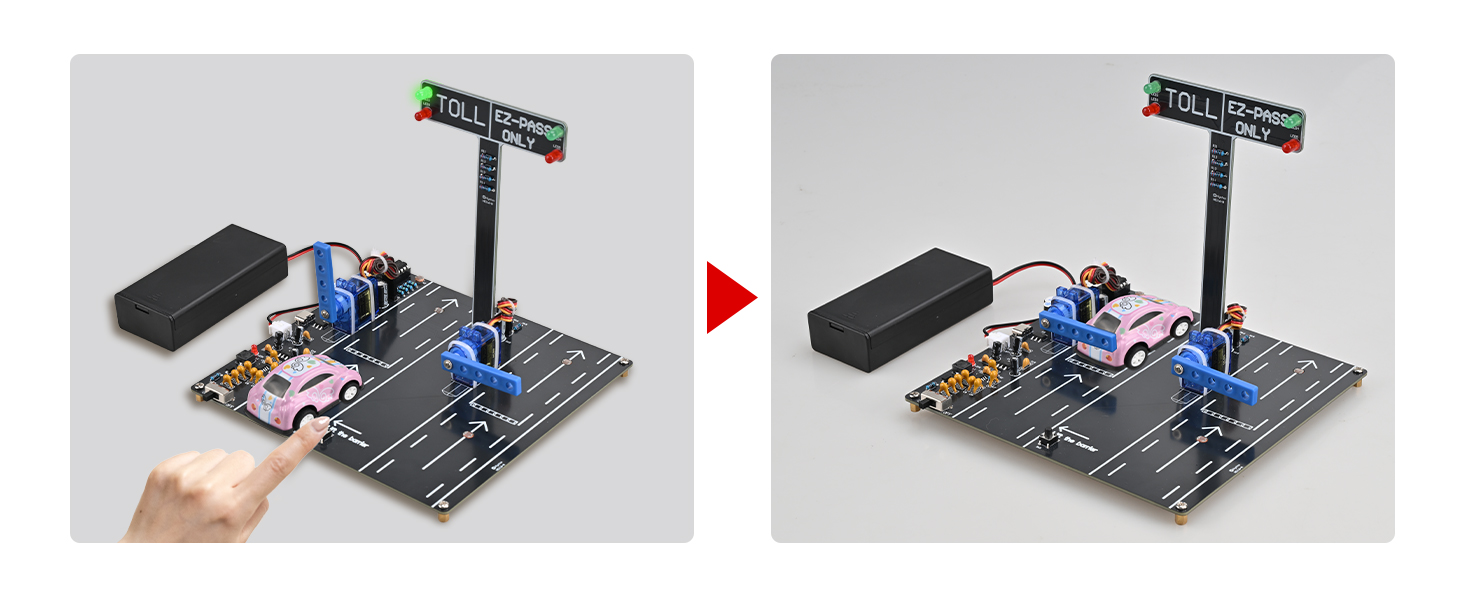
【Working Principle】: In the “EZ-PASS ONLY” lane, entrance and exit sensors control the gate automatically: it lifts when a car enters and lowers when the car exits. In the “TOLL” lane, the gate is raised by pressing the SW1 button and lowers after the car passes the exit sensor. Teaching the difference between electronic and manual toll operations.
【Interactive STEM Learning】:Two included mini cars let students test the highway toll booth in simulation, adding an interactive element that makes learning electronics both playful and educational. Whether used as a family project, a school STEM lab activity, or a unique gift, this kit combines creativity, problem-solving, and hands-on soldering practice in one engaging package.
【Soldering Practice Kit】: The connections are clearly mapped and labeled on the circuit board, making soldering hassle-free. This DIY soldering kit lets teens start from scratch, soldering the components themselves and understanding the connections and control principles. It's an excellent choice for hands-on learning, ideal for home education, school STEM programs, and electronics enthusiasts.
【Paper English Manual】:Comes with an exquisite paper installation manual which will guide you how to solder this electronics project step by step, ensuring a fun and educational experience for everyone. But please note, this diy soldering kit requires certain foundation of basic electronic theoretical knowledge and soldering and hands-on ability.
Working Principle of the Photoresistor
Core Mechanism:
1、The photoresistor operates based on the photoconductive effect. Its semiconductor material (such as cadmium sulfide, CdS) has very few charge carriers in the absence of light, resulting in extremely high resistance.
2、When exposed to light, photons excite electrons in the valence band and promote them to the conduction band, creating large numbers of free electrons and holes. As the carrier concentration increases, the resistance drops rapidly.
3、The resistance of the photoresistor is inversely proportional to the light intensity: the stronger the light, the lower the resistance, and vice versa.
Application:
1、A voltage-divider circuit is used to detect changes in ambient light levels.
2、When the environment changes suddenly from bright to dark, the photoresistor’s resistance increases, causing the output voltage to rise. This change is used to determine that a car is passing above the sensor, triggering the servo motor to open the barrier gate.